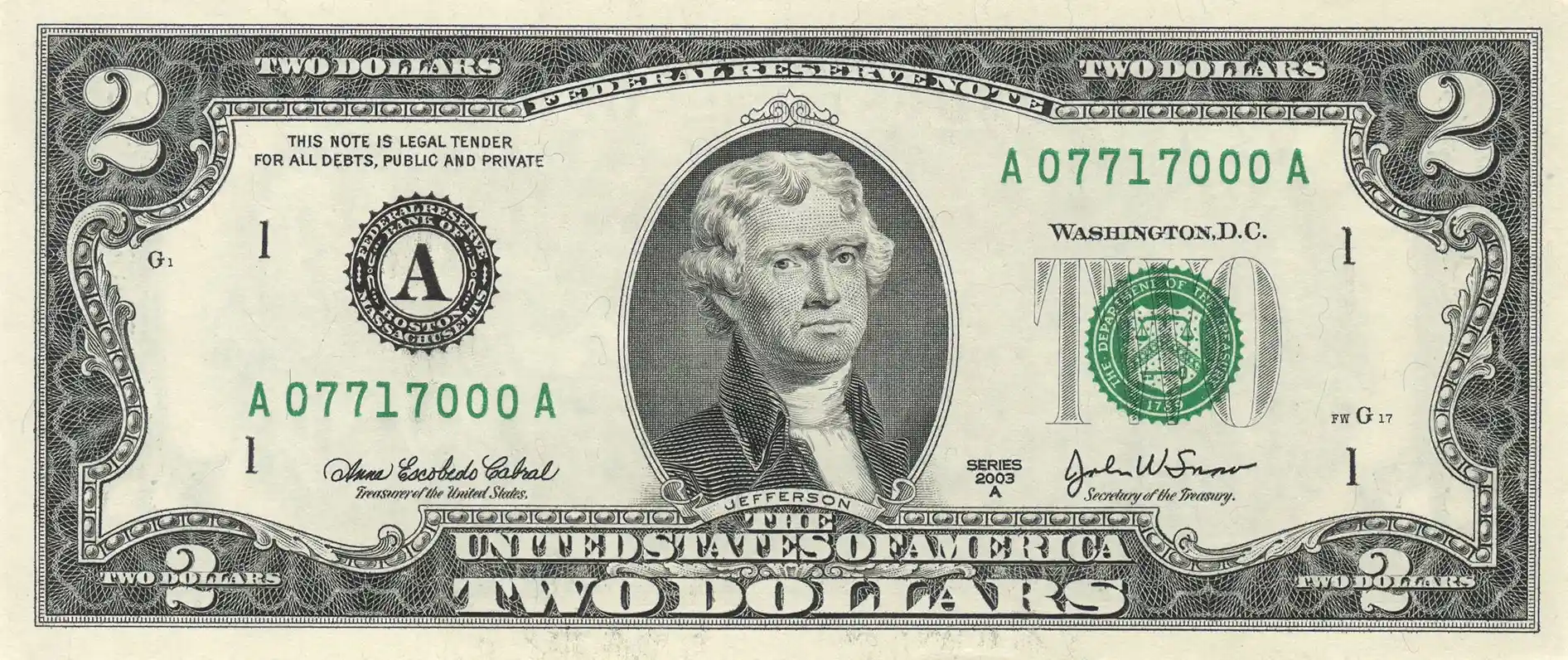
Average condition 1953 $2 bill value ranges from $4 to $8. Rare paper bills showing perfect preservation reach a price range between $50 and $100. A unique serial number note recently set an auction record price of $12500.
| Parameter | Value |
| Face value | $2 |
| Issue type | United States Note |
| Seal color | Red |
| Serial number color | Red |
| Paper length | 156 millimeters |
| Paper width | 66 millimeters |
| Material | Cotton and linen |
Core Value Factors
Paper money value grows under the pressure of several independent market forces. General market price trends show a yearly value increase of 5% to 7% for rare paper bills. Common series items lose buying power because of inflation, growing only 1% to 2% over ten years.
Paper Condition
Wear levels decide buyer demand. Professional grading company PMG divides paper bills into several preservation groups.
- Poor paper showing heavy circulation signs drops the bill value to a low $3-5 range
- Good paper showing minor fold marks raises the bill price to a $12-20 range
- Perfect paper showing zero circulation wear guarantees a quick sale at a $45-90 range
Series Letter
The letter near the series date shows the printing group. Every group has a unique printing size. A smaller printing size automatically creates market rarity. Small print runs show steady price growth.
Value by Series and Condition
| Bill Series | Very Good Condition | Almost Perfect Condition | Perfect Condition |
| 1953 no letter | $3-5 | $8-12 | $15-25 |
| 1953A | $3-5 | $8-12 | $15-22 |
| 1953B | $4-6 | $10-15 | $25-35 |
| 1953C | $5-8 | $12-18 | $40-60 |
Detailed Series Analysis
Every series group has signatures from different Treasury officials. These signatures help identify the exact printing period.
Series 1953
This printing group features signatures of Treasurer Ivy Baker Priest and Treasury Secretary George Humphrey. The printing run was huge. Common bills coming from pocket change do not interest big investors. Selling this bill for more than $6 is difficult due to massive market supply.
Series 1953A
These bills carry signatures of Ivy Baker Priest and the new Treasury Secretary Robert Anderson. Retail price points remain similar to the first 1953 run. Circulated paper bills hold a steady $4 value. Online auction sites show buyers want original packs containing one hundred crisp bills. A full pack price reaches $1800.
Series 1953B
This print run features signatures of Treasurer Elizabeth Rudel Sмит and Treasury Secretary Douglas Dillon. The number of surviving bills is much lower than earlier runs. A worn paper bill starts at a low $5 price. Clean paper bills bring a higher $30 price from collectors.
Series 1953C
This bill shows signatures of Kathryn O’Hay Granahan and Douglas Dillon. This is the hardest standard series to find. Perfect paper bills often cross the $50 price level. The yearly value growth for this group reaches 8%. Buying 1953C bills is a smart money move for collectors.
Star Bills and Real Value
Star paper bills replaced damaged sheets during the printing process. They show a star symbol at the start or end of the serial number. High rarity keeps star note prices very high.
Star Note Value by Series
| Star Series | Average Condition | Perfect Condition | Auction Record Price |
| 1953 Star | $15-25 | $80-120 | $1100 |
| 1953A Star | $18-30 | $90-130 | $1450 |
| 1953B Star | $25-45 | $150-250 | $3200 |
| 1953C Star | $40-70 | $300-450 | $4800 |
Star Series Value Analysis
High star bill values come from very low printing numbers. The market has a constant shortage of these items. Investors pay top dollar for 1953C star bills because very few survived. Buying a crisp 1953C star bill for $350 is a good investment with a five-year target price of $600.
Serial Number Influence on Market Value
Special number patterns raise the price of common bills by hundreds of dollars. Collectors pay high premiums for specific number styles.
Radars
Radar numbers read the same backward and forward. A good example is a number sequence like 24488442. This error type adds a $50-100 price bonus to the standard bill value.
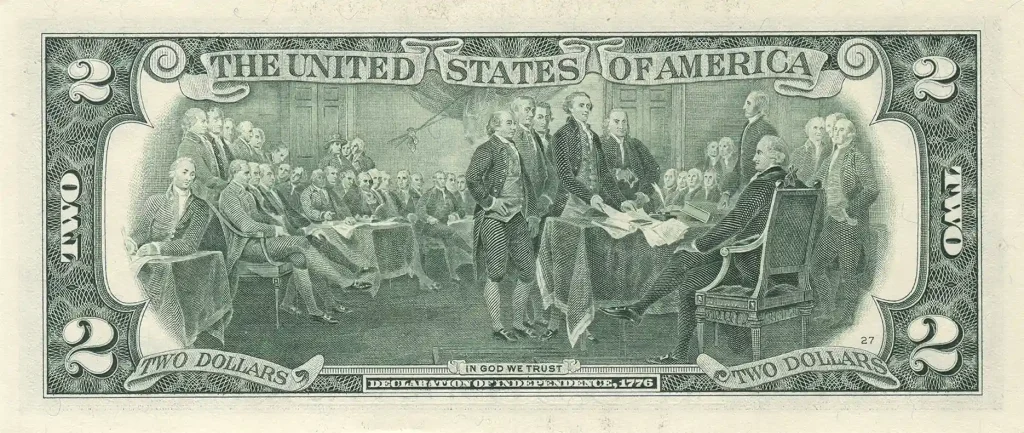
Low Numbers
Serial numbers from 00000001 to 00000100 bring huge bids at auction. The first ten printed bills of the 1953 run start at a $500 price on coin dealer websites. A 00000002 serial number bill sold for a record price of $4500.
Solid Numbers
Solid numbers use one repeating digit. A bill showing number 77777777 brings a $800-1200 price depending on paper freshness.
Print Office Errors
Factory mistakes offer the highest profit potential. Strict quality checks make these printing errors very rare. A confirmed error bill can sell for ten times the normal price.
Double Impression
A double impression happens when the paper goes through the printing press twice. The design looks blurry or doubled. A double print error in average condition brings a $400 price. Perfect condition error bills sell for $1500.
Off Center
Bad sheet feeding causes off-center errors. The design shifts, cutting off part of the picture and leaving a wide white edge. A small shift creates an $80 price tag. A major shift showing part of the next bill sells for a $350-600 price range.
Fold Over
Paper folds before the final cut cause extra paper flaps. The unique look of a fold-over error brings a $500 auction price.
Ink Smudge
Accidental ink spots lower the value of common bills, but genuine factory ink marks bring good money. A large extra red ink spot on the seal raises the bill value to a $150-250 range.
Practical Value Protection Tips
Bad owner actions can instantly cut paper bill value by 50% to 80%. Collectors must follow strict storage rules to keep their profit margins high and use of coin-identifier.com.
Storage Mistakes Lowering Bill Prices
- Using cheap album pages made with harmful chemical softeners causes paper rot, dropping a $90 bill price down to $15
- Keeping paper bills in bright sunlight fades the red ink seal, cutting the value to a low $5 price
- Washing dirty paper with water or chemicals destroys the original paper surface, reducing the collectible value by 70%
- Ironing out folds destroys the raised steel plate ink texture, taking away all chances for a high PMG paper grade rating